
June 15, 2026
Keeping Your South Florida Pool Clear During Spring Pollen Season
Spring in Palm Beach County brings heavy pollen that can clog filters and fuel algae. Learn official pool care tips to keep your water crystal clear during peak bloom.
The Yellow Dust Dilemma in South Florida
Springtime in Palm Beach County is a beautiful season, but for pool owners, it marks the arrival of the infamous yellow dust. Between the oak trees, pine trees, and local palms, our air becomes thick with pollen that eventually finds its way onto the surface of your swimming pool. While many people mistake this yellow or greenish tint for mustard algae, it is often just a heavy layer of organic material that requires a specific approach to manage.
Handling pollen isn't just about aesthetics. If left unmanaged, pollen settles at the bottom of the pool, providing a buffet of nutrients for algae to feed on. In our humid climate, where the sun is already heating the water, this combination can lead to a green pool in a matter of days. Keeping your pool clear during the spring requires a proactive strategy that focuses on filtration and physical removal.
Maximizing Your Filtration and Skimming
Your pool's filtration system is your primary defense against pollen. During peak bloom, you should consider increasing your pump run time. Even if you usually run your pump for eight hours, adding an extra two to four hours can make a significant difference in how much airborne material is captured before it has a chance to sink.
Skimmer baskets do the heavy lifting, but pollen is often fine enough to pass right through the mesh of a standard basket. A professional trick is to use a fine-mesh skimmer sock or even a pair of nylon stockings over your skimmer basket. These will trap the ultra-fine particles that would otherwise circulate back into the pool. Be sure to check and clean these daily, as they can clog quickly when the pollen count is high, which puts unnecessary strain on your pump.
Managing Water Chemistry and Algae Risks
Pollen is organic matter, and when it decomposes in your water, it consumes chlorine. You might find that your chlorine levels drop faster in the spring even before the summer heat hits its peak. Regularly testing your water is essential. If you notice your free chlorine levels dipping, you may need to supplement your usual routine with a shock treatment to oxidize the organic load.
Because pollen acts as a precursor to algae blooms, keeping your phosphate levels low is another critical step. High phosphate levels combined with organic debris like pollen create the perfect environment for algae. If you are struggling to keep the water clear despite having good chlorine levels, have your phosphate levels checked. Keeping the chemistry balanced ensures that the pollen remains a nuisance rather than a catalyst for a full-scale algae outbreak.
Surface Removal and Automatic Cleaners
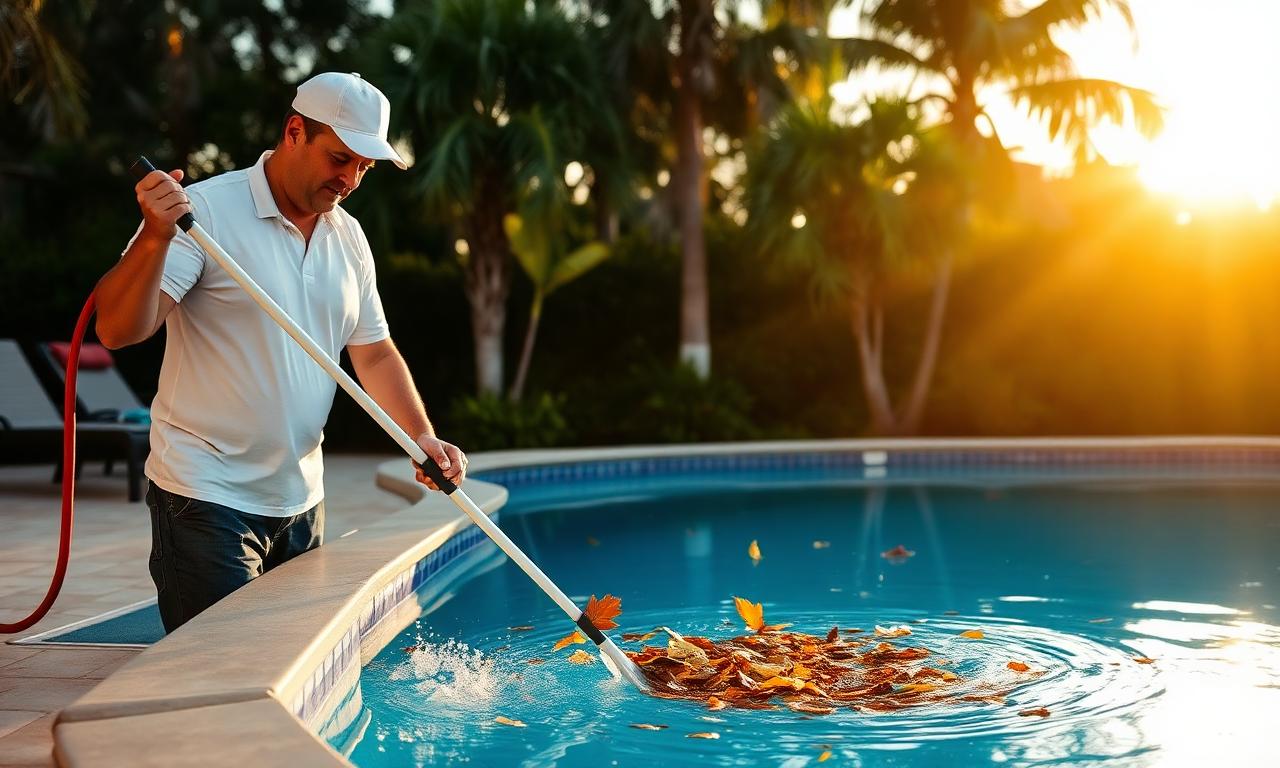
Once pollen sinks to the floor, it becomes much harder to remove. Using a fine-mesh hand skimmer to clear the surface multiple times a day is the most effective way to prevent debris from settling. Focus on the corners of the pool and the areas around the tile line where pollen tends to clump and form a yellow ring.
If you have an automatic pool cleaner, ensure it is in good working order. Suction-side and pressure-side cleaners are helpful, but robotic cleaners with high-quality internal filters are often the best for fine particles like pollen. Regardless of the equipment you use, remember that spring is a high-maintenance season. Brushing the walls and floor at least twice a week will keep the pollen suspended so the filtration system can do its job.
Managing the Tile Line and High Humidity
In South Florida, our high humidity can cause pollen to stick to the tile line and create a stubborn, gummy residue. If you let this sit in the hot sun, it can bake onto the tile and become difficult to remove later in the year. A quick wipe-down with a pool-safe tile cleaner or a soft sponge can prevent this buildup. Managing the perimeter of your pool by trimming back overhanging branches can also reduce the direct drop of pollen and leaves into the water.
Maintaining a pool during a South Florida spring takes a bit of extra effort, but staying ahead of the pollen count ensures your water stays inviting and healthy throughout the season. If you find yourself overwhelmed by the spring bloom or the changing chemistry of your water, the team at Collegiate Pools is here to help keep your backyard oasis in top shape. Reach out to us for professional maintenance tailored to our unique local climate.