
November 2, 2026
Essential Hurricane Preparation for Palm Beach County Pool Owners
Learn how to protect your South Florida pool from storm damage. Our expert guide covers water levels, equipment safety, and post-hurricane cleanup for local homeowners.
Understanding the Risks of South Florida Storms
Living in Palm Beach County means hurricane season is a regular part of our yearly routine. For pool owners, these storms present more than just the inconvenience of a power outage. Between the torrential rains, high-speed winds, and the salt-heavy air that characterizes our coastal environment, your backyard oasis is vulnerable to significant damage if not prepared correctly.
At Collegiate Pools, we have seen the aftermath of countless tropical systems. The primary goal of hurricane preparation is not to keep the pool clean—that is almost impossible during a major event—but to protect the expensive mechanical components and the structural integrity of the pool itself. Taking a few proactive steps before the winds pick up can save you thousands of dollars in repairs once the skies clear.
The Golden Rule: Never Drain Your Pool
One of the most common mistakes homeowners make when a hurricane approaches is draining their pool. It seems logical to remove water to account for the incoming rain, but in South Florida, this can be a catastrophic error. Our water table is incredibly high, especially during the rainy season.
When you empty a pool, the weight of the water that normally holds the shell in place is removed. If the surrounding ground becomes saturated with rainwater, the resulting hydrostatic pressure can literally lift the pool out of the ground or cause the walls to crack and buckle. Always keep the water in the pool to provide the necessary weight to counteract the upward pressure of the groundwater. If you are concerned about overflow, you can lower the water level by about 12 to 24 inches, but never empty it completely.
Protecting Your Mechanical Equipment
Your pump, motor, and salt chlorine generator are the most expensive parts of your pool system, and they are also the most susceptible to storm damage. Before the storm arrives, you should turn off all power to the pool equipment at the main circuit breaker. This prevents electrical surges from frying the motor or control board if the grid fluctuates or if a line goes down nearby.
If your equipment is located in an area prone to flooding, you may want to consider wrapping the motor in heavy-duty plastic and securing it with duct tape or tie-downs to prevent water intrusion. However, this is only a temporary measure; once the storm passes, you must remove the plastic immediately to prevent condensation and overheating. If a major flood is imminent, some homeowners choose to have a professional disconnect the motor and move it to a high, dry location inside the home.
Dealing with Furniture and Debris
Loose items in your backyard can become dangerous projectiles in hurricane-force winds. Patio chairs, tables, pool toys, and cleaning equipment should be moved into a garage or shed. A common myth suggests throwing patio furniture into the pool to keep it from blowing away. We strongly advise against this. The chemicals in the pool can damage the finish of your furniture, and more importantly, the metal or plastic frames can scratch or gouge the pool's plaster or vinyl liner. Furthermore, removing heavy furniture from the bottom of a pool after a storm is an unnecessary and difficult task.
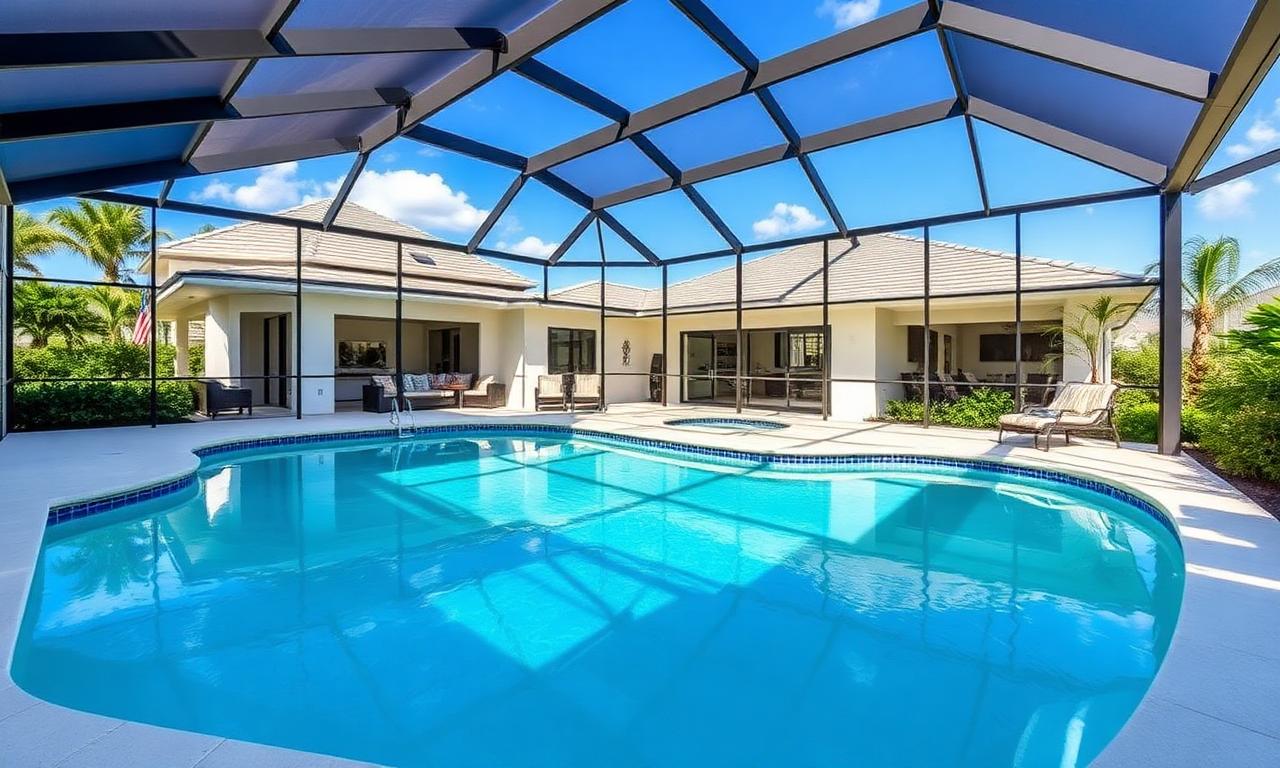
If you have a screen enclosure or lanai, consider removing a few screen panels or "pulling the spline" on opposite sides of the enclosure. This allows the wind to blow through the structure rather than acting as a sail, which can prevent the entire aluminum frame from collapsing under the pressure.
Preparing the Chemistry for the Aftermath
While you cannot stop organic debris, silt, and salt spray from entering your pool during a hurricane, you can prepare the water to fight off algae growth. Before the storm hits, we recommend super-chlorinating the water by adding a heavy dose of liquid chlorine or "shocking" the pool. This provides a buffer against the contaminants that will inevitably be blown in.
Once the storm has passed and it is safe to go outside, your first priority should be removing large debris like branches and leaves before they have a chance to stain the pool floor. Do not run your pump until you have inspected the equipment for water damage and cleared the skimmer and pump baskets. Running a pump clogged with debris can quickly burn out the motor.
If your pool has been flooded with runoff or large amounts of debris, the chemistry will be completely unbalanced. The influx of nitrogen, phosphates, and bacteria requires professional testing and treatment to ensure the water is safe for swimming again. After a major event, be patient with the cleanup process and prioritize safety above all else.
If you are feeling overwhelmed by storm preparations or need help getting your pool back in order after a hurricane, the team at Collegiate Pools is here to support you. We have decades of experience navigating Palm Beach County weather and can ensure your system is handled with care. Reach out to us for expert assistance with your equipment and water chemistry needs.