
September 14, 2026
Optimizing Pool Maintenance Under a Screen Enclosure or Lanai
Learn how to manage algae, airflow, and debris in your screened-in South Florida pool. Expert tips for maintaining lanais in Palm Beach County's heat and humidity.
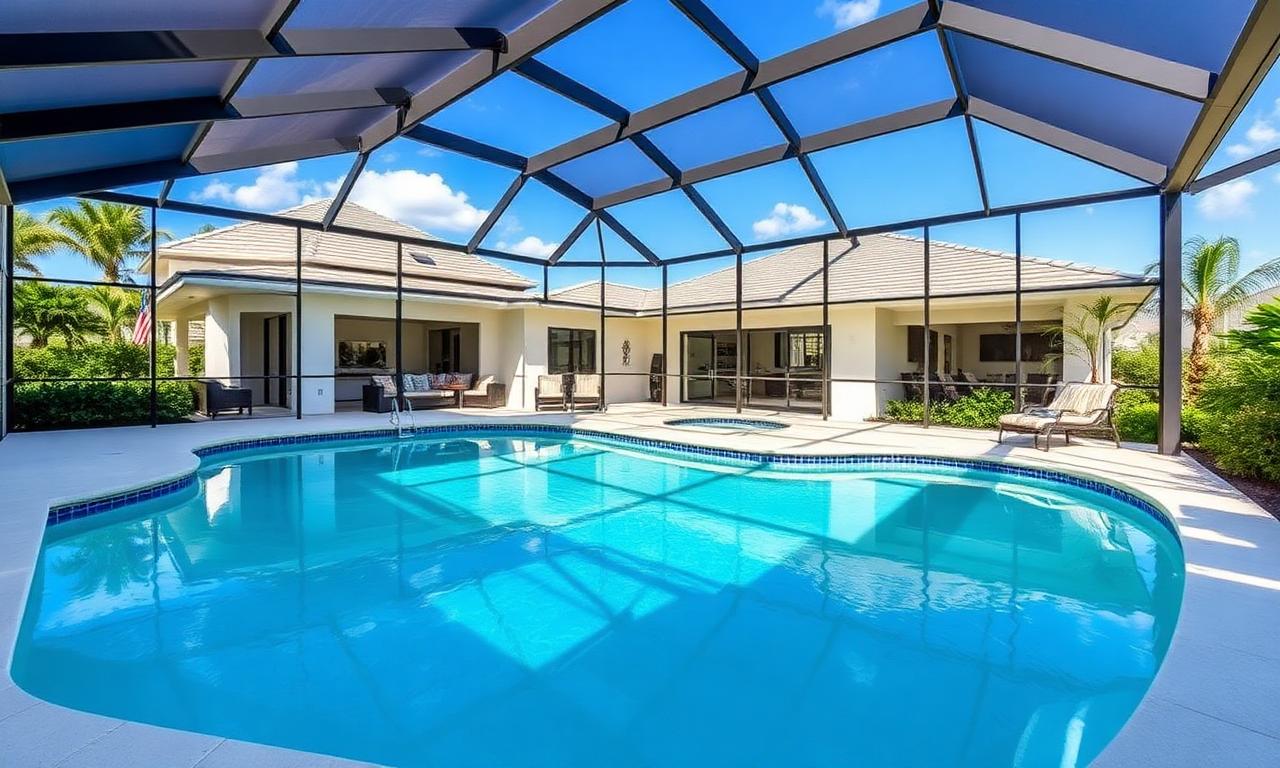
Managing the Unique Microclimate of a Screened Pool
Many South Florida homeowners choose a screen enclosure to keep out mosquitoes and the heavy debris of our tropical landscape. While a lanai offers excellent protection against falling palm fronds and pesky insects, it creates a specific microclimate that changes how you must care for your pool. A screen does not mean your pool is maintenance-free; in fact, the reduced airflow and trapped humidity can lead to unique challenges like stubborn algae growth on the deck and framing.
In Palm Beach County, our high humidity and intense heat can turn a screened-in area into a greenhouse. Without the natural circulation of wind across the water surface, heat remains trapped. This warmth, combined with the organic matter that inevitably sifts through the fine mesh, creates an ideal breeding ground for organisms. Understanding that your screened pool requires a different approach than an open-air pool is the first step to keeping your water crystal clear.
Combatting Algae and Biofilm on Screen Mesh and Framing
The screen itself acts as a massive filter for the air. Over time, it collects pollen, dust, and salt spray from the Atlantic breeze. When our frequent South Florida rain showers hit, these contaminants are washed down into your pool water. Furthermore, the aluminum framing and the mesh often develop a green or black film of algae and mildew due to the constant moisture.
To prevent this from affecting your water chemistry, you should pressure wash or soft-wash your enclosure at least once or twice a year. If you notice green tinting on the interior of the screen, it is already shedding spores into your pool. Use a specialized outdoor cleaner safe for aluminum to scrub the base of the enclosure where dirt tends to accumulate. Keeping the structure clean reduces the total organic load your chlorine has to fight, allowing your chemicals to work more efficiently.
The Importance of Manual Skimming and Circulation
It is a common misconception that a screen enclosure eliminates the need for skimming. While you will not be dealing with large oak leaves or coconuts, fine debris like oak tassels, pine needles, and tiny insects still find their way through the mesh. Because there is less wind to push these floaters toward the skimmer throat, they often sit on the surface until they become waterlogged and sink.
Sunken debris under a lanai tends to concentrate in corners because of the lack of natural water movement. I recommend checking your skimmer baskets twice a week, even if the pool looks clean at a glance. You may also need to adjust your return jets to ensure there are no dead zones in the corners of the pool. Proper circulation ensures that the filtered water reaches every inch of the pool, preventing stagnant spots where algae can take hold despite having proper chlorine levels.
Balancing Chemistry Without Direct Sunlight Exposure
One of the benefits of a screen is that it provides a small amount of UV protection, which can help your chlorine last slightly longer than it would in an open pool. However, the lack of direct sunlight can also be a double-edged sword. Sunlight helps break down chloramines—the spent chlorine molecules that cause that distinct pool smell and skin irritation. In a screened pool with less UV penetration and limited airflow, these chloramines can linger longer.
Monitoring your pH and total alkalinity is critical because the lack of "splashing" rain and heavy wind means the water chemistry remains relatively static until a heavy storm hits. When we get those South Florida downpours, the rain that hits the screen often picks up concentrated pollutants from the mesh and dumps them directly into the pool. After a heavy storm, always test your water. You might find that your stabilizer levels or pH have shifted more than expected due to the runoff from the enclosure roof.
Maintaining the Deck and Coping Under the Lanai
The area between your pool and the screen tracks is prone to trapping moisture. In South Florida, this leads to a buildup of slick algae on pavers or decorative concrete. Not only is this an aesthetic issue, but it is also a safety hazard. Regularly sweeping the deck and ensuring that the drainage tracks at the base of the screen are clear of dirt and leaves will allow water to exit the lanai properly during rainstorms.
If you find that your deck is constantly damp, you may need to trim back landscaping outside the screen to improve natural light and airflow. Keeping the perimeter of the enclosure clear of heavy brush helps the structure dry out faster after a storm, which protects both the screen and your pool water quality.
Maintaining a screened-in pool requires a keen eye for the subtle changes that our local climate creates within the enclosure. If you are finding it difficult to keep up with the unique demands of your lanai or if algae seems to be winning the battle, Collegiate Pools is here to help. Our family-run team has decades of experience navigating the specific needs of South Florida backyard oases.